
Capturing a Queen: The Image of Anne Boleyn
One of the most fascinating but equally frustrating parts of Anne Boleyn’s story is her appearance. Despite her colossal infamy as undoubtedly the most famous, the most studied and the most consequential of the six queens of King Henry VIII, we still do not truly know how she appeared to her contemporaries. Only a small number of images of Anne Boleyn taken from life exist to this day, and they, alas, do not tell us very much. One is a badly damaged medal, another is a woodcut. There are of course countless portraits of Anne, but all, to the best of our knowledge, were painted long after she had died, most during the reign of her daughter, Queen Elizabeth I. Many portraits are held overseas, or in private collections, meaning it’s seldom possible to see them in the flesh. It was thrilling, therefore, to discover some time ago that Hever Castle, the building so closely associated with Anne’s story, would be unveiling a new exhibition which brought together the greatest number of images and artefacts of, and linked to, Anne Boleyn. The exhibition, which opened a few weeks ago, is titled Capturing a Queen: The Image of Anne Boleyn, and was curated by historians Kate McCaffrey, Ali Palmer and Owen Emmerson. I was honoured to be given a private tour of the exhibition by a Hever Castle guide, and was utterly bowled over by what has been created.
Rather than simply throwing all the images and artefacts together in a single space, the exhibition is structured into different, for want of a better term, categories, of Anne Boleyn imagery, and can be found throughout Hever Castle. These range from the small smattering of contemporary images of Anne, to examining descriptions of her by those who knew or physically saw her, to bringing together the many “B pendant” pattern portraits, enabling the viewer to break down how Anne has been viewed and interpreted in so many different ways.
Anne Boleyn is one of the most recognisable figures in Tudor history, yet paradoxically, her true likeness remains elusive. Many contemporary images were destroyed after her execution in 1536, leaving behind a fragmented and often contradictory visual legacy. This exhibition leans into that uncertainty. Rather than presenting a single “definitive” portrait, it showcases dozens of competing images—some painted decades after her death—each shaped by politics, propaganda, and cultural memory. The result is less a gallery of answers and more a carefully curated debate. Visitors are even encouraged to weigh the evidence and decide for themselves which face, if any, comes closest to the real Anne. It’s no spoiler to say that I wholeheartedly disagree with the sketch which Owen Emmerson in particular is convinced by, namely the “Windsor Sketch”, featuring a double chinned woman in a night gown. To me, it just is not Anne, but Owen feels otherwise and it’s entirely probable that he is right and I’m wrong, but that’s history, that’s how it should be, and the exhibition really encourages debate.
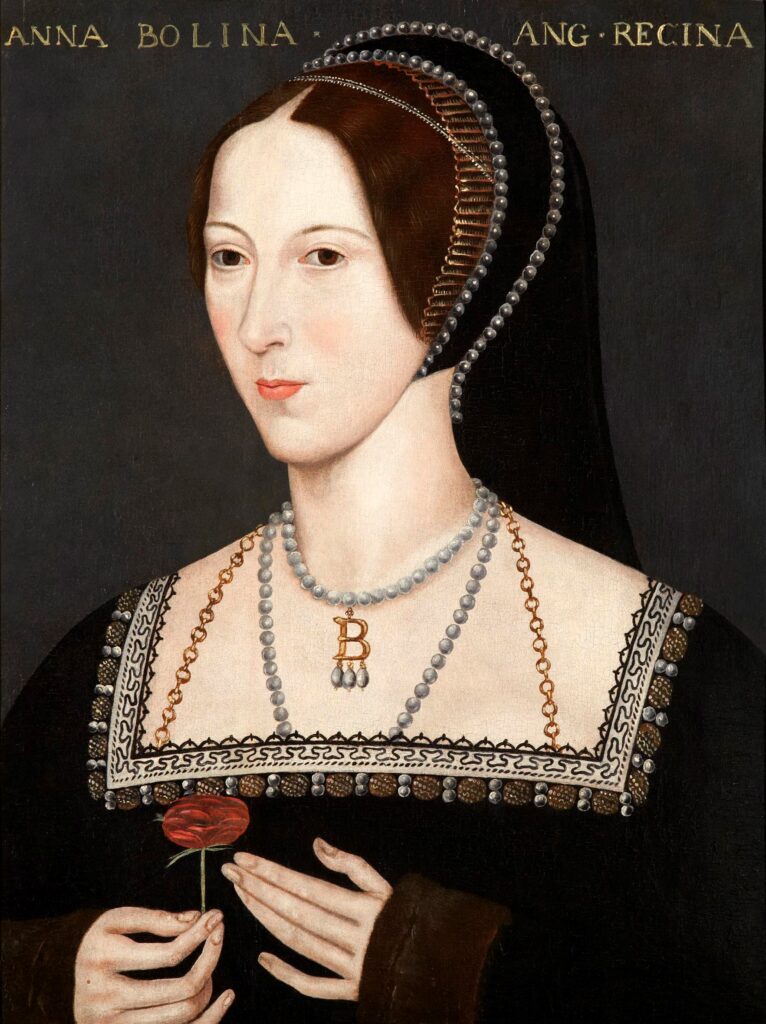
What makes Capturing a Queen particularly compelling is its focus on how Anne’s image has been continuously rewritten over the past 500 years. From Tudor propaganda to modern film and television, each generation has reshaped her appearance to suit its own narrative. The exhibition traces this evolution through portraits, costume displays, and cultural artefacts, revealing how Anne has been imagined as everything from seductress to political mastermind.
One striking takeaway: Anne’s historical impact may have had little to do with her physical beauty at all. Contemporary accounts suggest it was her intelligence, charisma, and sharp wit that captivated Henry VIII—a reminder that the obsession with her looks may say more about us than about her.
At the heart of the exhibition is new scientific research that challenges long-held assumptions. The famous “Hever Rose” portrait, for instance, has undergone infrared analysis and dendrochronology, revealing that it was altered, possibly to counter rumours that Anne had a sixth finger, a myth used to paint her as a witch. Elsewhere, fresh scholarship suggests that some well-known “Anne Boleyn” portraits may not depict her at all, but instead borrow the face of her daughter, Elizabeth I, to reinforce Tudor legitimacy. These discoveries transform the exhibition from a traditional art display into something closer to a historical investigation, one where science, politics, and myth collide.
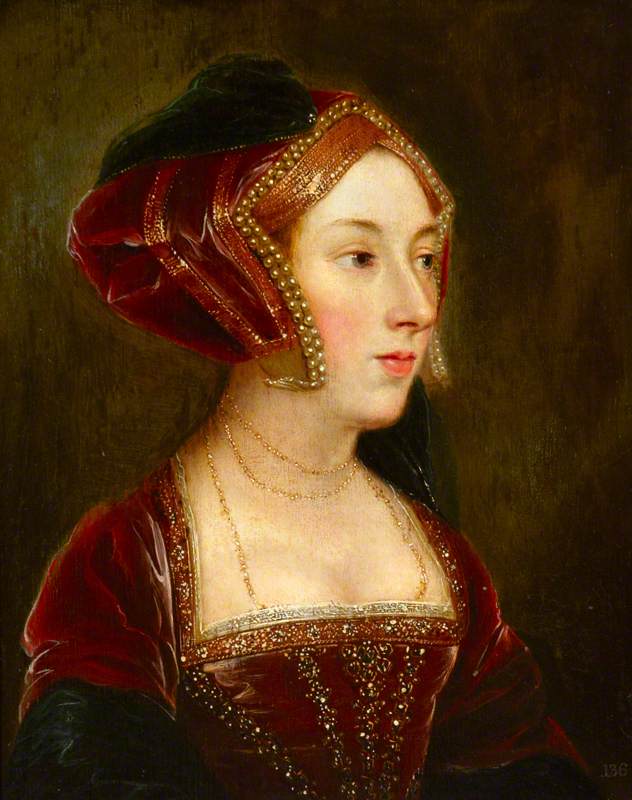
There is perhaps no more evocative place to host this exhibition than Hever Castle itself. Once Anne’s family home, its rooms have been carefully restored to reflect the Tudor world she inhabited, grounding the exhibition in a deeply personal context. As you move through the castle, from the Long Gallery to newly curated exhibition spaces, you are not just looking at portraits; you are stepping into the environment that shaped the woman behind them. I was incredibly excited to see portraits of Anne Boleyn in the flesh that I’d only ever seen online, including the well known “Nidd Hall” portrait, the Lyndhurst portrait, which is usually held in New York and could possibly be an original of Anne Boleyn with overpainting, and two portraits on loan from Kentwell Hall, one undoubtedly Anne, the other labelled so, but to my mind is more likely to be Jane Seymour, something Hever Castle historian Kate McCaffrey agrees on. Another really interesting part of the exhibition is the artefacts, many of which are on display for the very first time. Perhaps the most exciting is a chair that very likely belonged to Anne Boleyn. It was discovered by historian and friend of Simply Tudor Tours, Sandra Vasoli, who has been doing a lot of research into it. She conjectures that the chair was created while Anne was serving Queen Claude in France, it features AB initials in the woodwork, confirming to whom it belonged. It is in incredible condition, it looks brand new! Attendees on our Rise and Fall of Anne Boleyn tour will be getting a private viewing of this exhibition and the artefacts!
Marking 500 years since the beginning of Anne’s relationship with Henry VIII, Capturing a Queen arrives at a moment of renewed fascination with Tudor history. But rather than retelling a familiar story of ambition and downfall, the exhibition reframes Anne as something more complex: a figure whose identity has been constructed, deconstructed, and reconstructed across centuries. In doing so, it asks a broader question, how do we remember powerful women in history? Through fact, fiction, or something in between?
Capturing a Queen is not just about discovering Anne Boleyn’s face, it’s about understanding why we’ve been trying to find it for so long. By blending art history, scientific research, and storytelling, this exhibition offers a fresh, thought-provoking perspective on one of history’s most enduring enigmas. And in the end, it suggests that the real Anne Boleyn may be less about how she looked, and more about the legacy she left behind.
Would you like the chance to visit this exhibition in-person?
In September 2026, Simply Tudor Tours will be running its popular The Rise & Fall of Anne Boleyn Tour. As part of tour this, we’ll be visiting Hever and the exhibition in-person.
You can find our more about this tour here.
You can read more about Capturing a Queen: The Image of Anne Boleyn here.